
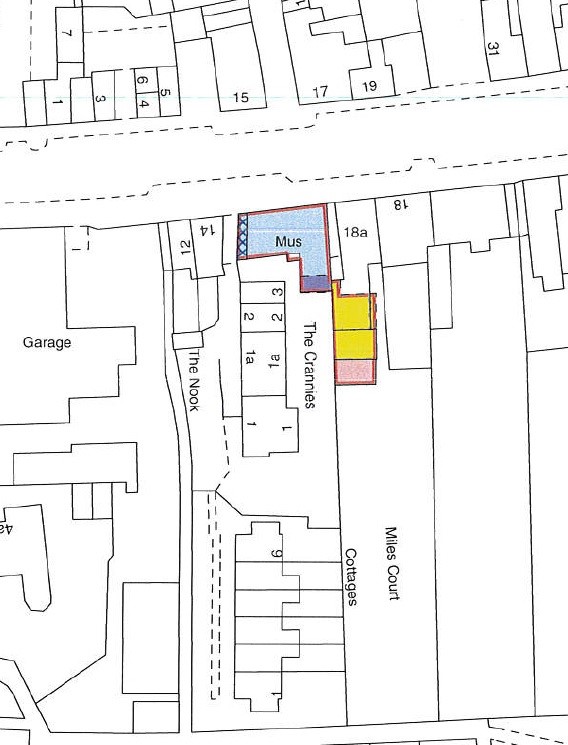
Until 1982, the stable that you are in now did not belong to the Museum, but to the house next door. Long ago, the two houses which are now numbered no.18 and 18a Etnam Street were one house; 18a was the coach house for the bigger no. 18. On the plan you can see Etnam Street running across the top. The biggest Museum building is coloured blue. It lies within the original long narrow burgage plot, which has been filled with smaller houses since it was laid out by the monks 800 years ago. The pink and yellow buildings are clearly in the next door plot. When it was first built, the occupants of no.18 were wealthy enough to own several horses and a carriage. The horses were kept in the stable (the upper rectangle marked yellow) and the carriage probably in the white space marked ‘18a’ nearer to the street. When you leave the Museum, look for the large double door next to the Museum through which the carriage would have been driven.
When the Museum bought the stable in 1982, all the original stalls were still in place.
Until the early 20th century horses featured large in the life of the town. They were used for all sorts of different purposes, reflected in these photos.
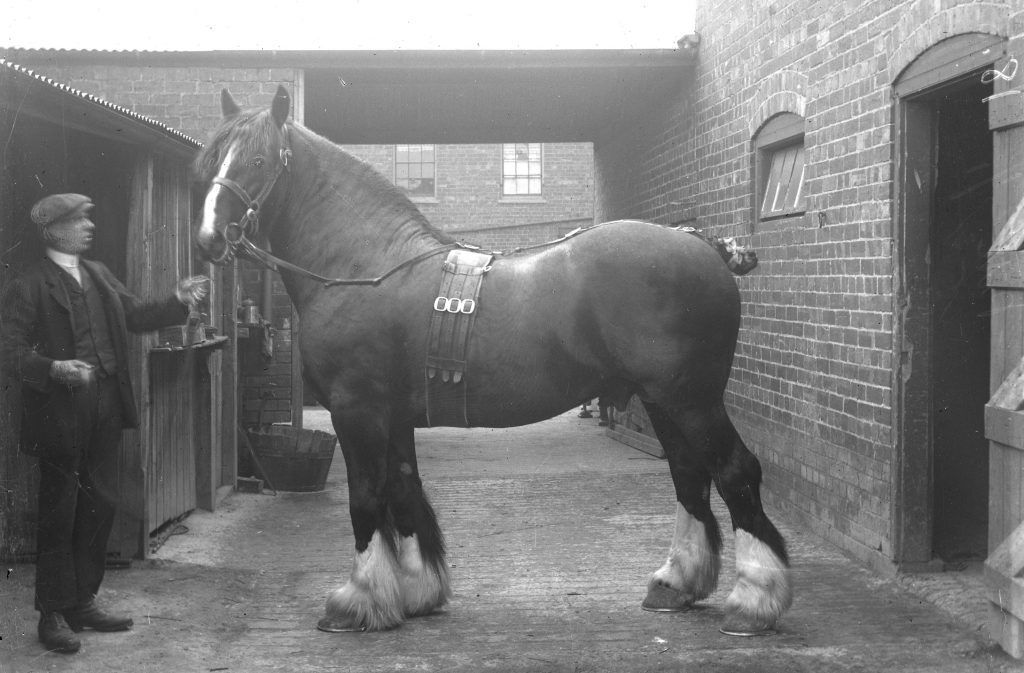
They’d got 4 big cart horses like. … Of course I was only just turned 14 like, and to gear them up, putting gears on them, used to be a pretty big job for me. Putting the big collar on was pretty hard like, I had to get up in the boosey [manger] to do that. And then after I’d put the cart saddle and all, the bridle on. … I used to take the horse round to where the cart was. I can remember this one day I backed him into the cart, the horse, I lifted the shares up and [went] underneath his head to throw the back chain over, the cart like, when I was doing that, he bit me on the arm. My brother, Charlie, he worked there a bit. He was better than me with the horses. He could gear it up like in the stables and he’d tell the horse what to do, you know. He could back it into the cart and he wouldn’t put his hand on the horse. He’d just tell him like.
Arthur Evans
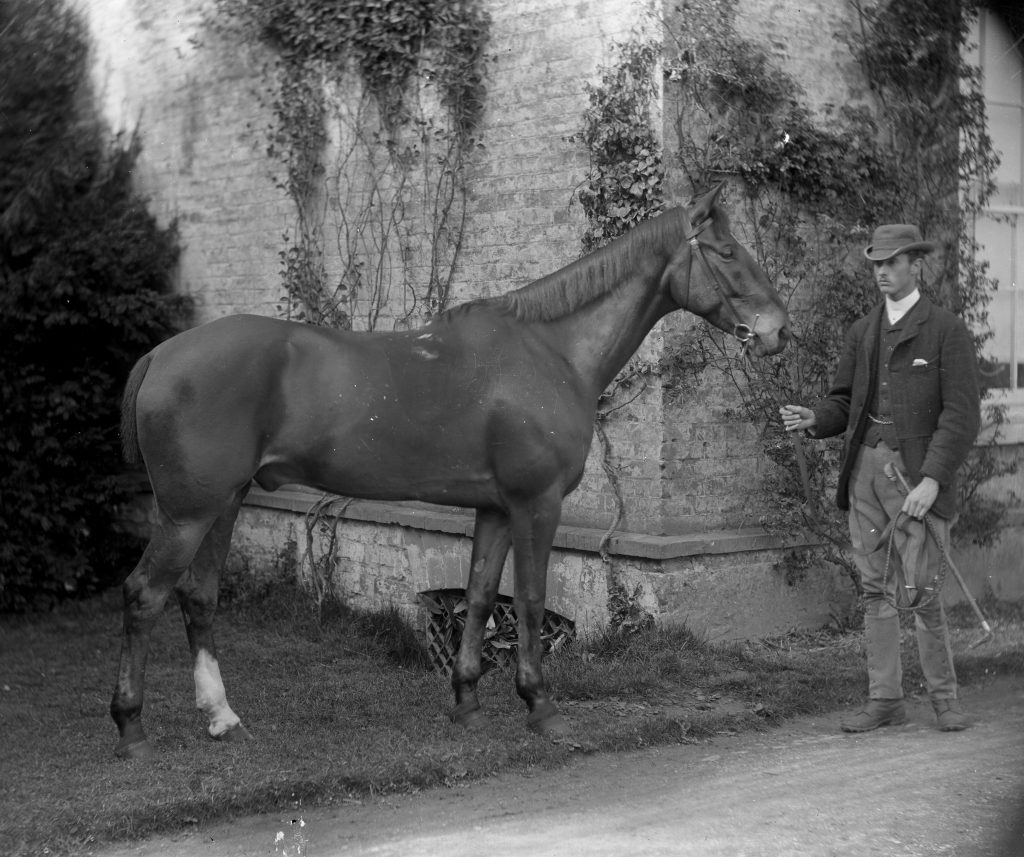
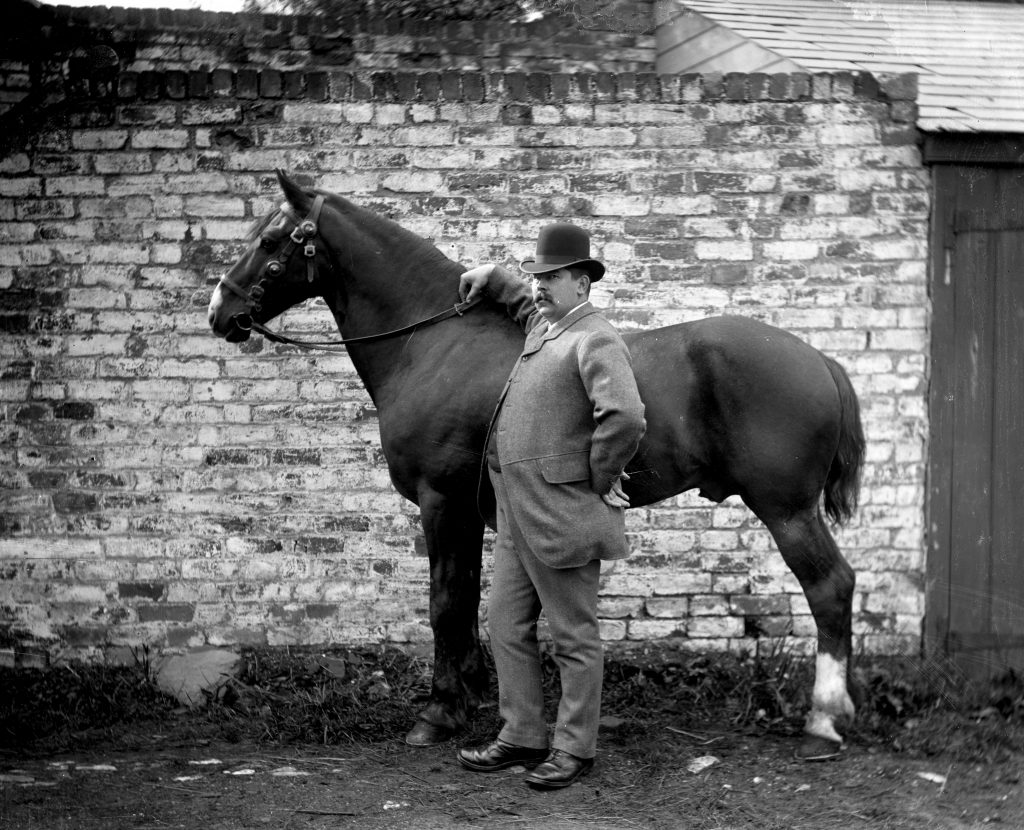
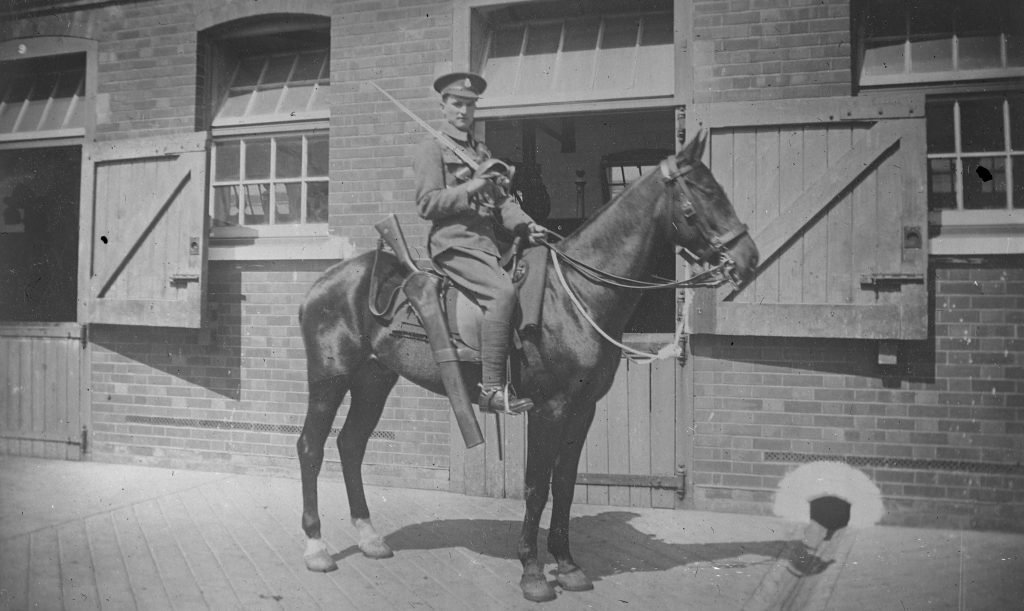
Thousands of animals were used for haulage, but the role of the cavalry in battle became less and less important. The last ever cavalry charge to capture artillery guns was in 1917.
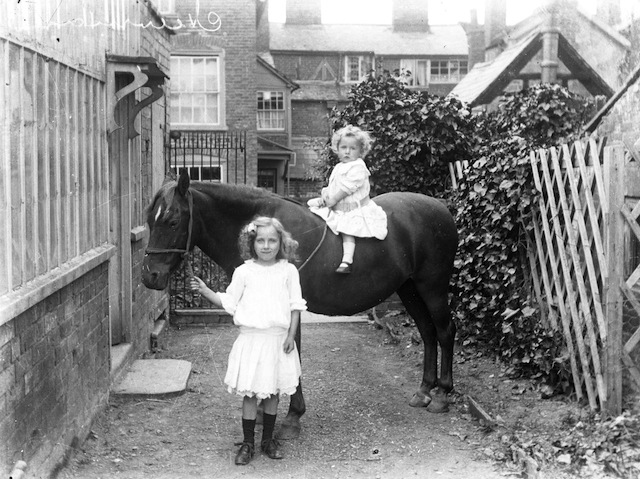
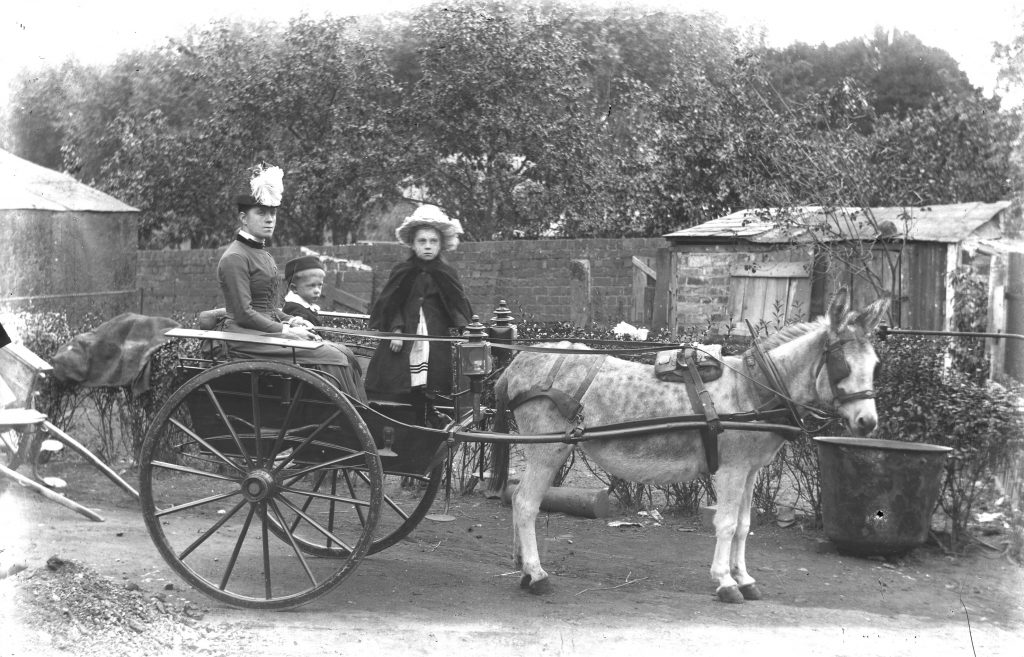
My mother used to have the pony and trap from next door to drive into town, and take her butter and eggs and things like that. And sometimes we would be lucky enough to go. I know one day I followed mother … oh, a quarter of the way into Leominster. In the end she gave in and let me ride. Another pleasure to remember, if we were fortunate enough to be taken to town on market day with mother driving Miss Proudman’s pony and trap or later on the local buses, would be a visit to ‘Pewtress Tea Rooms’ in Broad Street for a cup of tea and a Chelsea Bun. That was a big thing.
Herbert Millichamp

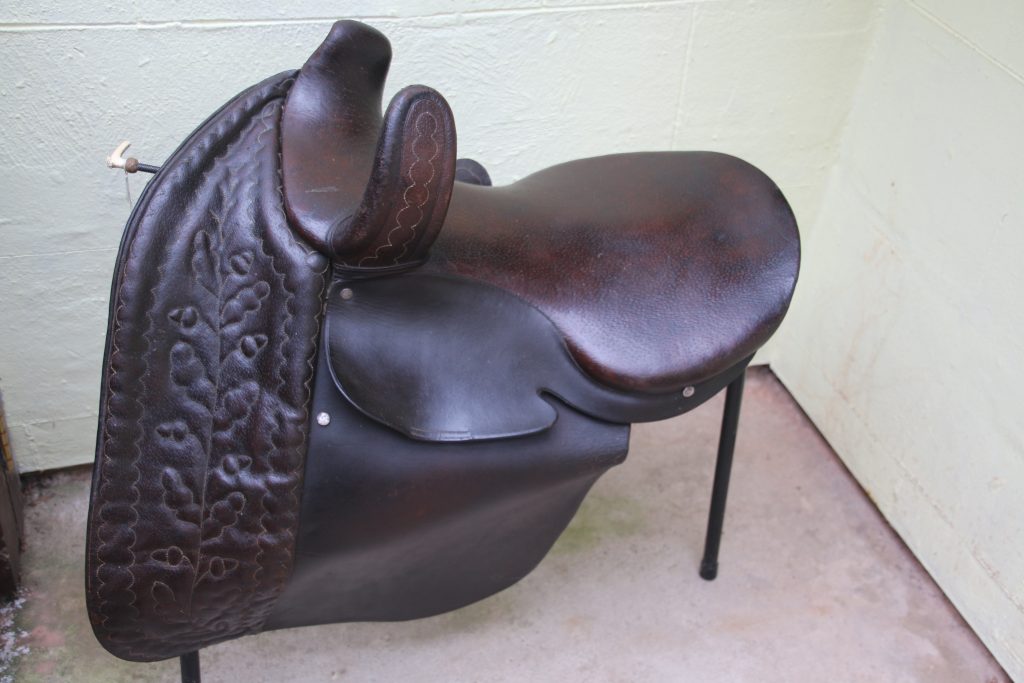
A side saddle allows a rider to sit sideways on a horse. This dates back centuries and developed as a way for women in long skirts to ride a horse modestly. It was considered improper for a woman to straddle a horse while riding. It was a like a small chair; the woman sat facing sideways with her feet on a small footrest. This made it difficult for her to both stay on and use the reins to control the horse, so it was usually led by another rider, sitting astride. In the 1830s, Jules Pellier invented a side saddle design with a second, lower pommel on it. In his design, still used today, one pommel is nearly vertical. The rider’s right leg goes around that pommel. The lower right leg rests up against the second pommel (called the leaping horn). The rider places her left leg beneath this one, with the top of the thigh touching it, and places her left foot in a single stirrup on that side. This gave women increased security when riding side saddle, allowing them to stay on at a gallop and even to jump fences. In the early 20th century, as women began to ride astride while wearing split skirts, and eventually jodhpurs, the side saddle fell out of use. However, enthusiasts kept the tradition alive until it enjoyed a revival beginning in the 1970s.
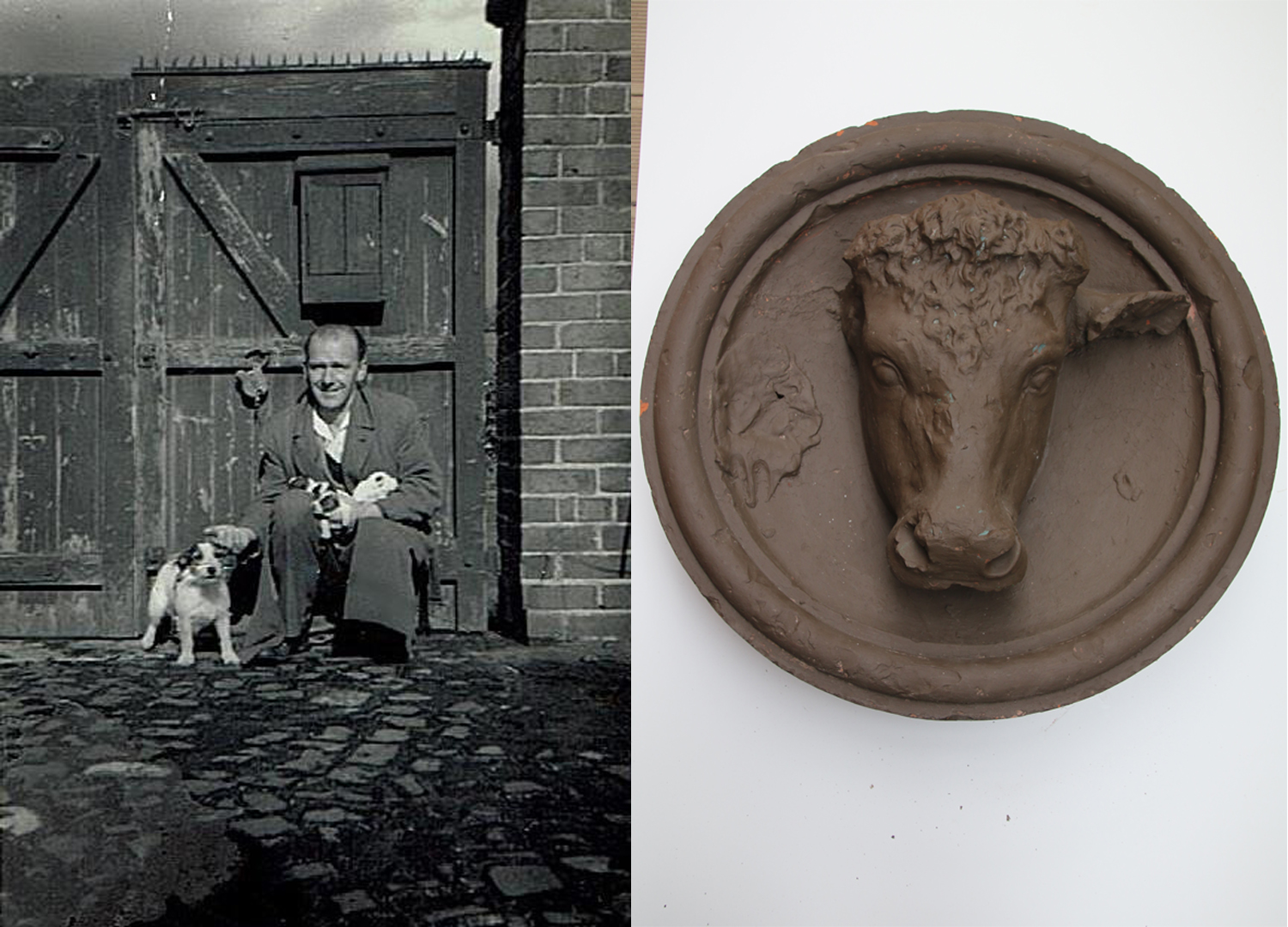
This plaque was once attached to the building of the local abattoir or slaughterhouse, which stood opposite Leominster Station. Running it was the responsibility of the Town Council. The slaughterhouse and pens were built by the Council in 1876 on land on the west side of the Worcester Road nearly opposite the Railway Station. The building had a large yard at the rear and was supplied with gas. At the time, there were several other small private slaughter houses attached to shops in the town, which were described at the time as “ great nuisances, with two honourable exceptions”. However, the Council could not close abattoirs while they were properly run.
In the 1950s and 1960s the slaughterman was Malcolm Newman, pictured in the photo sitting outside the abbatoir gates with his pet dog and her puppies. As well as working in town, Mr Newman used to travel out to farms to despatch sick or injured animals. In the early 20th century, many animals were moved into and around the town on foot. Herds of cattle were driven down Etnam Street from the market, either to the abattoir or to be loaded live onto trains. One Leominster man still remembers being paid a few pence with his friends in the 1930s to stand at the entrance to small alleyways leading off Etnam Street in order to stop animals escaping! There were fewer Health and Safety and animal welfare regulations in those days. Two people still recall the fun they had when they were given an inflated pig’s bladder by the slaughter man to use as a football, with no ill effects.
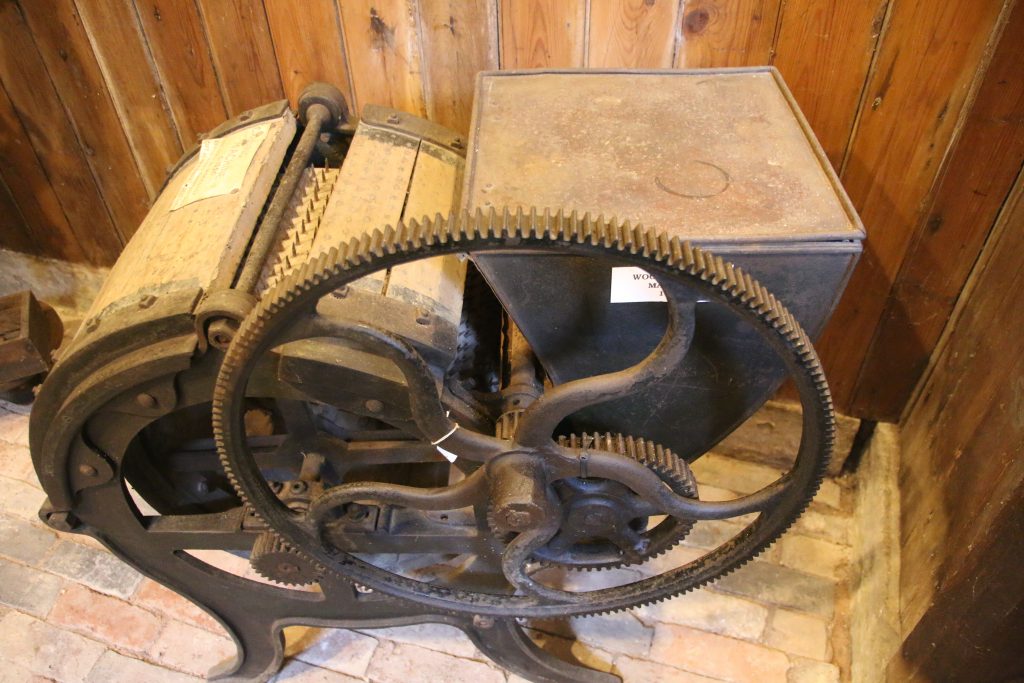
Carding is a process that untangles and cleans fibres to produce a continuous web ready for spinning and weaving. The word is derived from the Latin carduus meaning thistle or teasel, as dried vegetable teasels were first used to comb the raw wool. In the early eighteenth century, wool in England was carded using pairs of hand tools. In 1748 Daniel Bourn obtained a patent for a cotton carding machine and probably used it in his cotton spinning mill in Leominster, but this burnt down in 1754 and was never rebuilt. His invention was later developed and improved by the famous Richard Arkwright and Samuel Crompton elsewhere, but the pioneering role of Bourn and Leominster should not be forgotten. From the 1780s, carding machines were set up in mills elsewhere. Priority was given to cotton, but woollen fibres were being carded in Yorkshire by 1780. This machine is not a factory sized one, but more of a cottage carder, perhaps used by a sheep farmer to process small amounts of wool for home spinning and weaving.
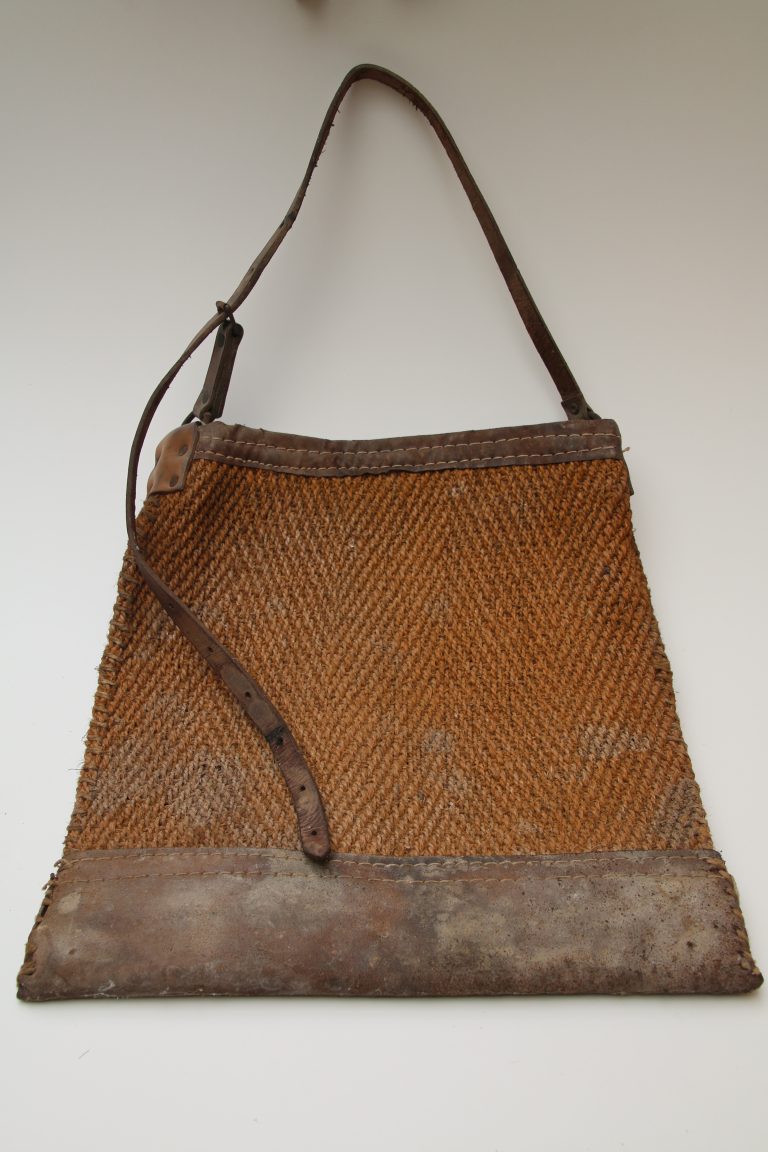
A nose bag is a bag, filled with horse food, and attached to the head of a horse, enabling it to eat. The main advantages are that only a small amount of the food is wasted, and it prevents one horse eating another one’s food. The bag also allows the horse to eat on a long journey away from its stable. This bag is made of what looks like jute and leather. Most modern bags are made of nylon, with a solid bottom and mesh sides for ventilation. To get at the feed near the bottom of the bag, the horse needs to be able to touch its head to the ground, allowing it to push its nose into the end of the bag.
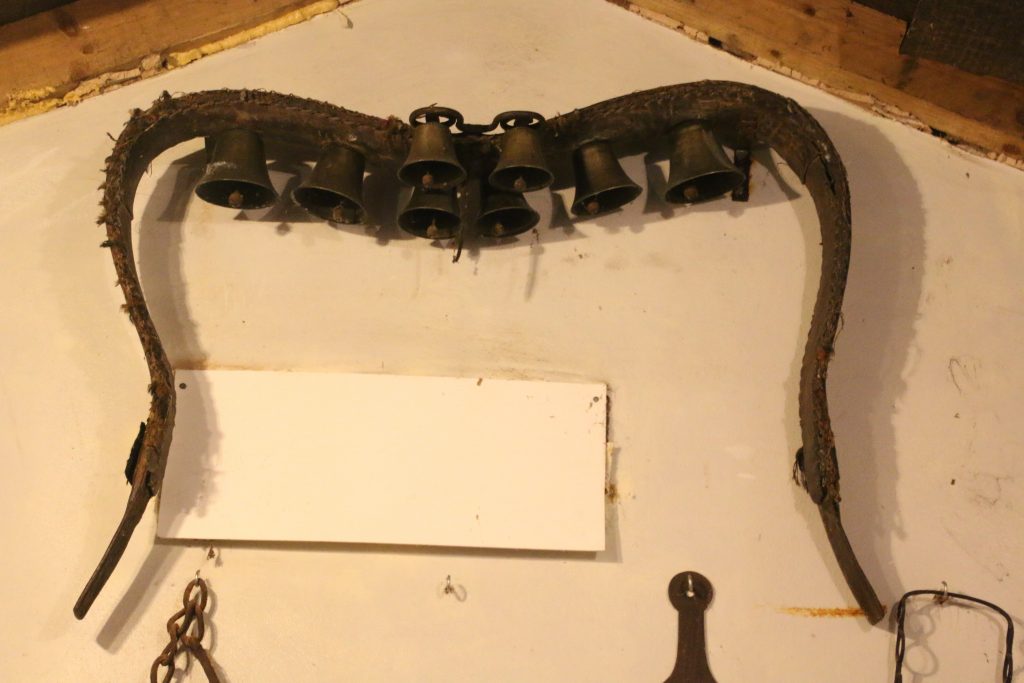
Horses were used for many tasks around the farm until the early 20th century – pulling ploughs, wagons and all sorts of other farm equipment. The horse harness has been decorated in different ways for thousands of years. There are many examples of Roman, Saxon and Celtic metal decorations. During the 19th century, there was much emphasis in agricultural improvement and animal welfare. By the late 18th and 19th century heavy horse harness was decorated with brasses and bells of all kinds and sizes. Some of it served a functional purpose, but much was purely for display. During this era working horse parades were popular throughout the British Isles and prizes were given. Horse brasses, bells and other harness decorations, as well as special grooming, gave the working animals a truly magnificent appearance and status. Even in the 21st century, decades after the arrival of tractors, teams of draught horses are kept for display purposes, and the ability to plough a straight furrow with a horse drawn plough at a ploughing match is a valued skill.
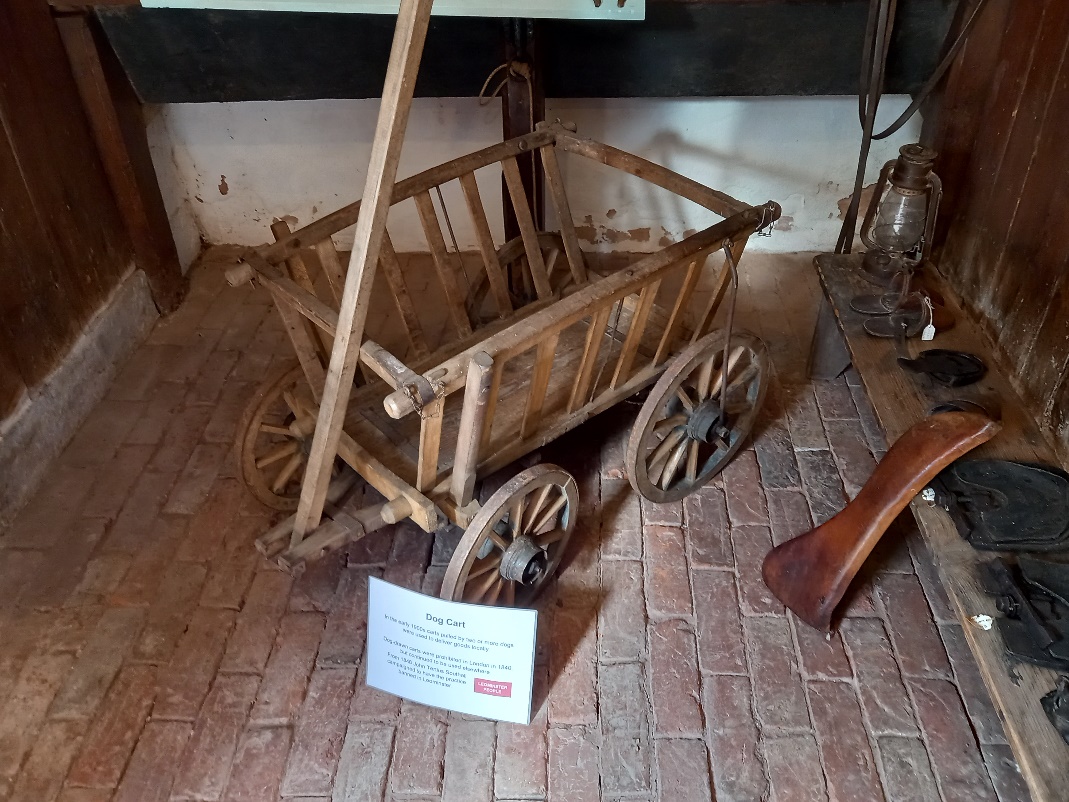
Large dogs have been used to pull carts or sledges for hundreds of years. Ancient Roman and Greek pots show dogs pulling carts and several First Nations tribes in North America are known to have used them. In the 18th and 19th centuries, they were used in Britain and the Netherlands for local deliveries, particularly of bread. They were more commonly found in rural areas than in cities. Concern for dog welfare led them to be banned in London in 1839. Dog cart driving is still popular in some countries as a leisure pursuit. This cart was probably used on a local farm.