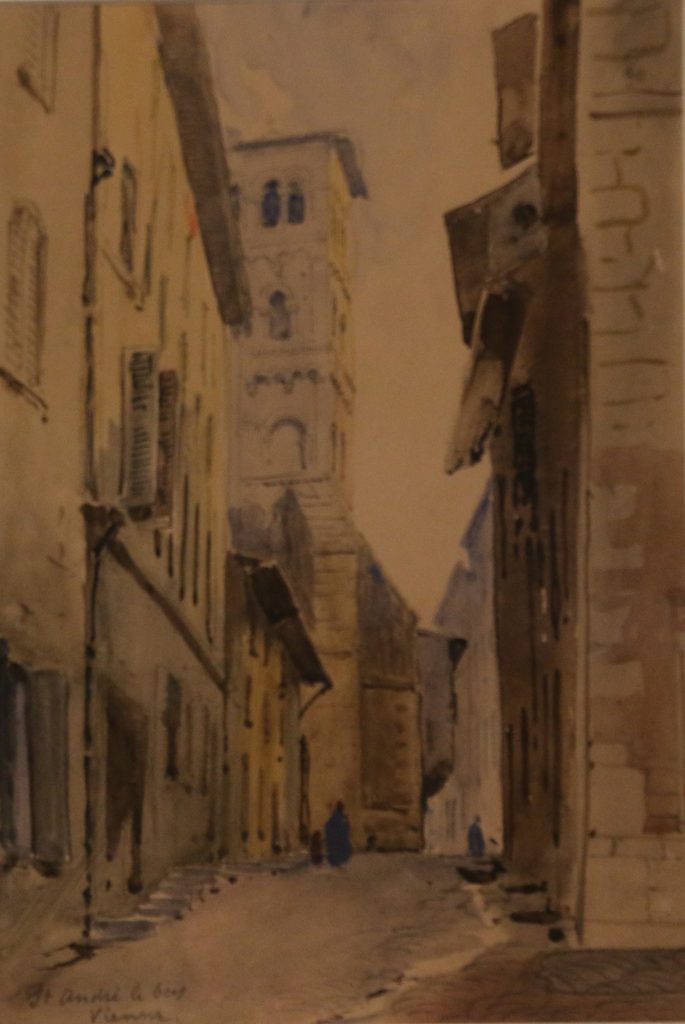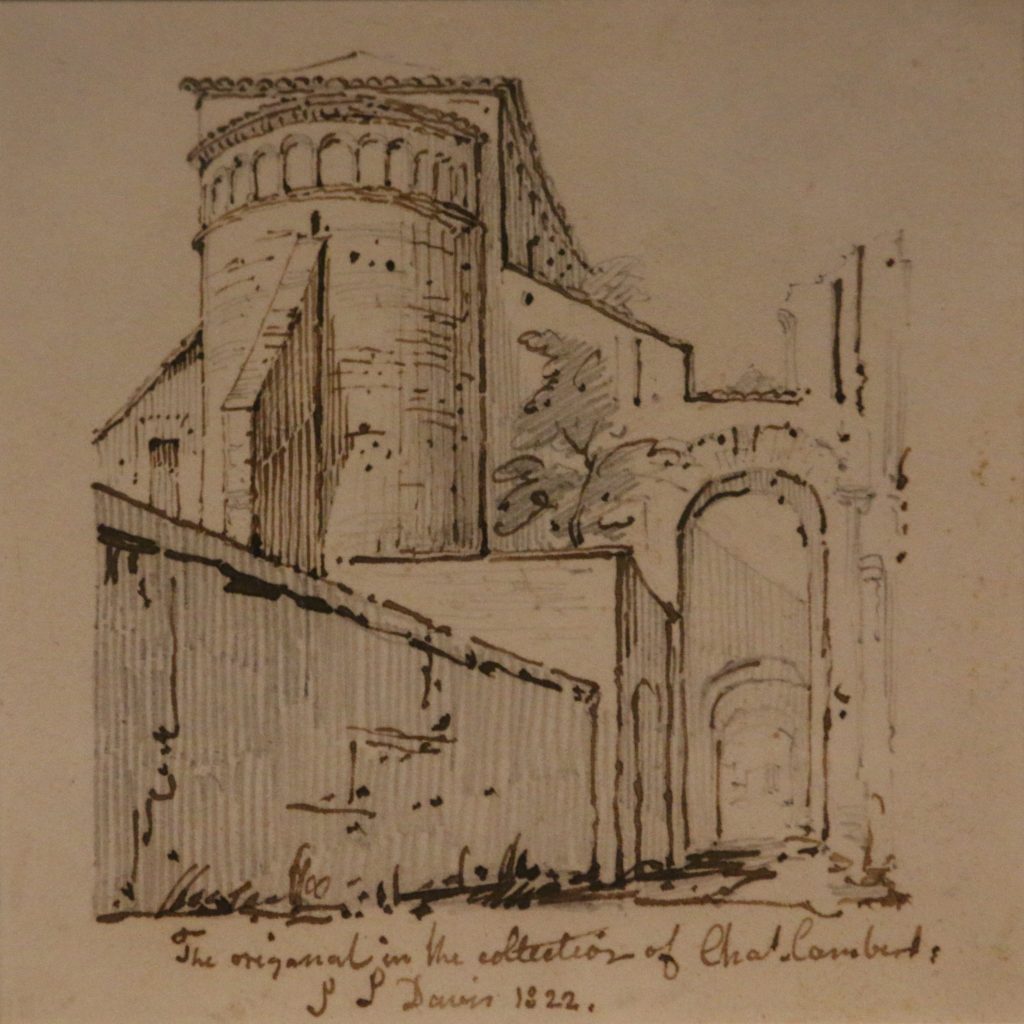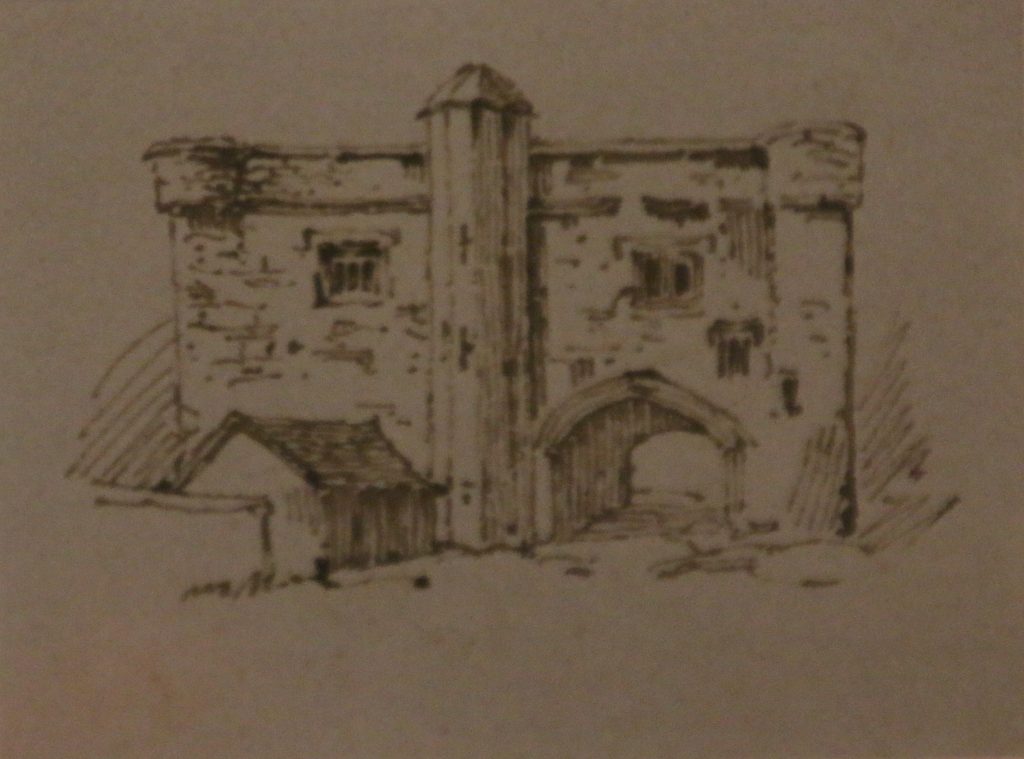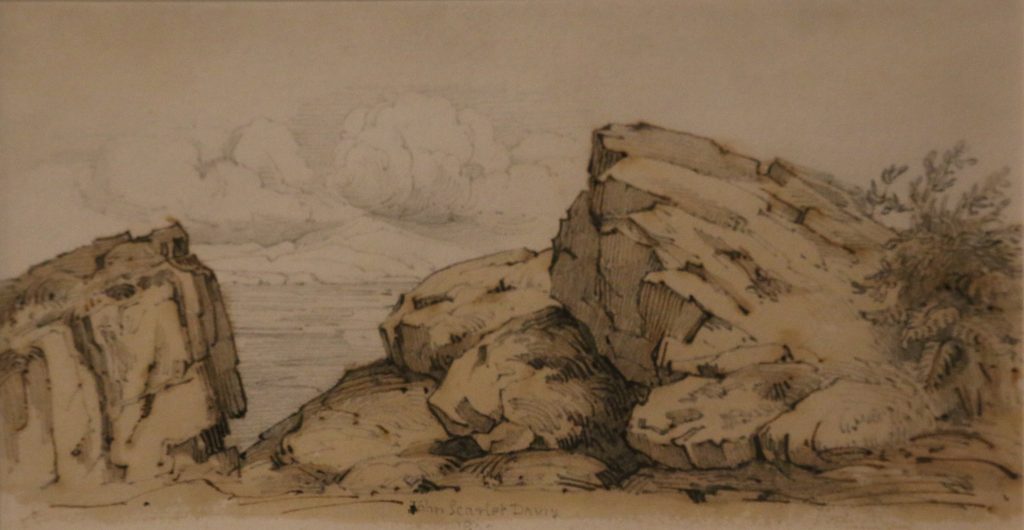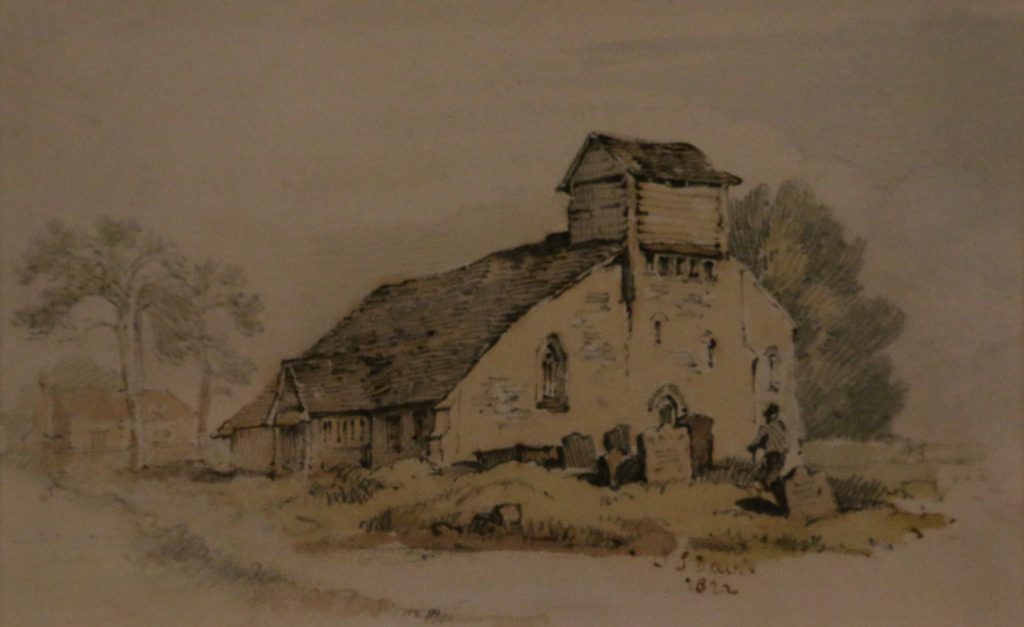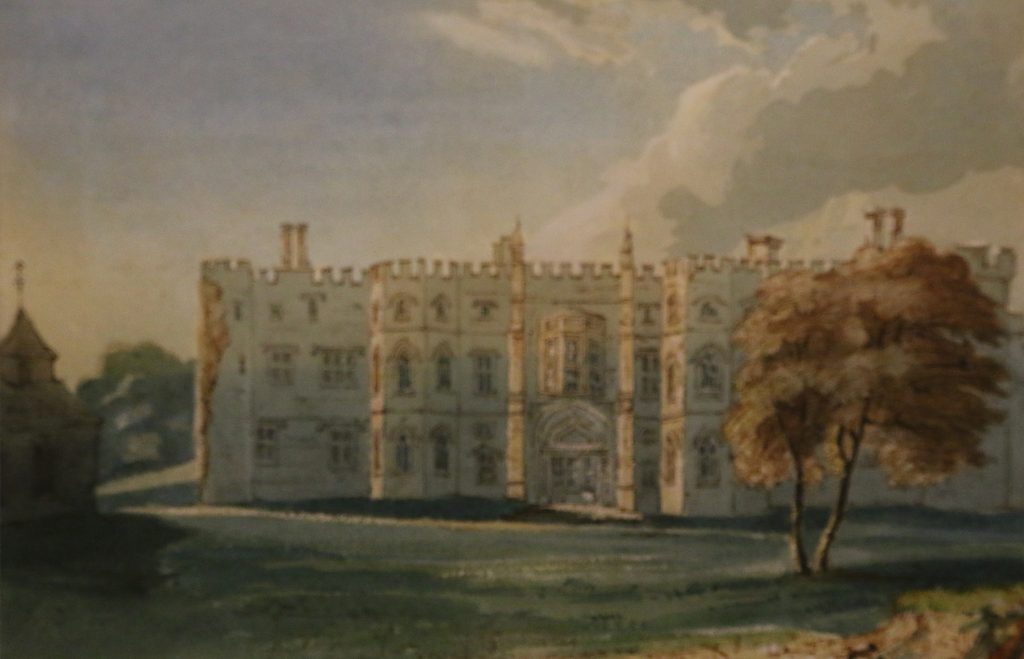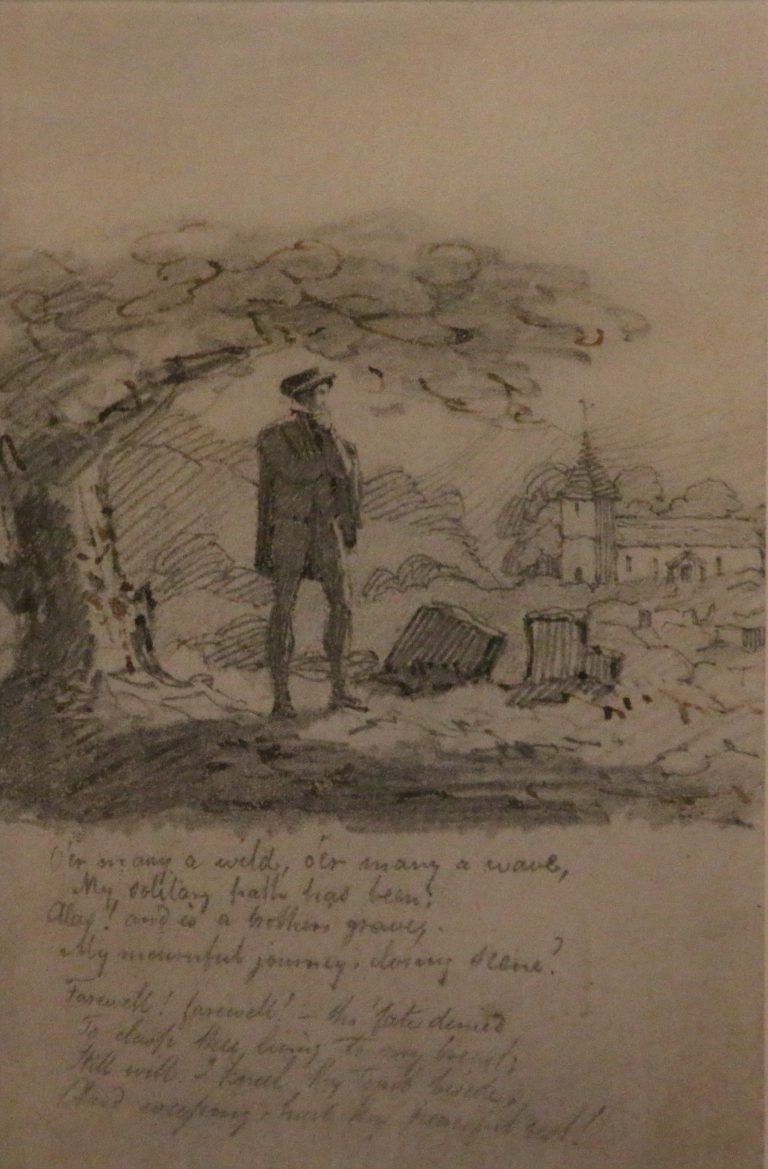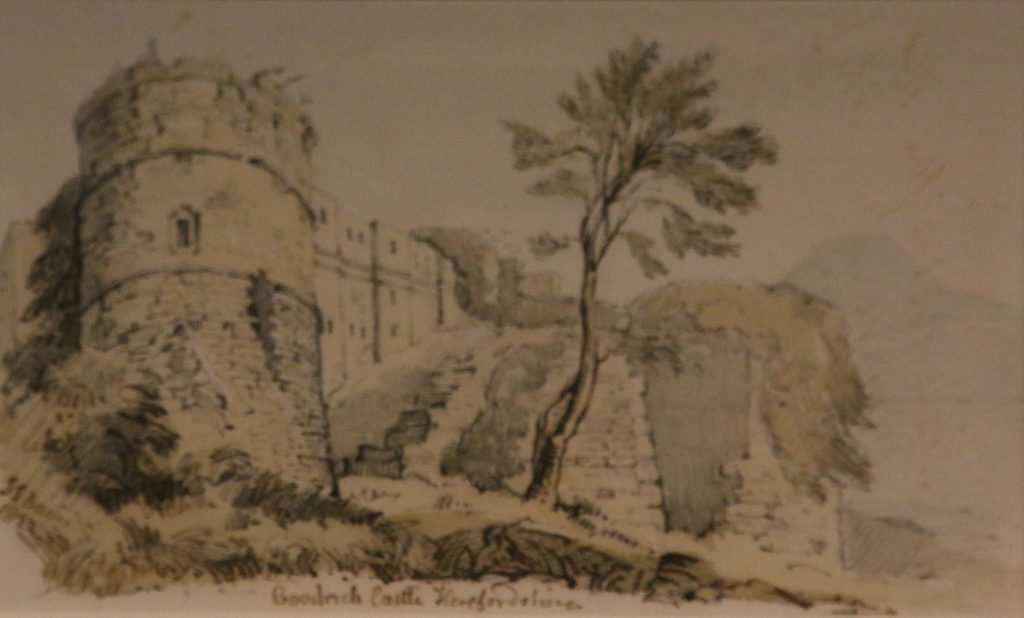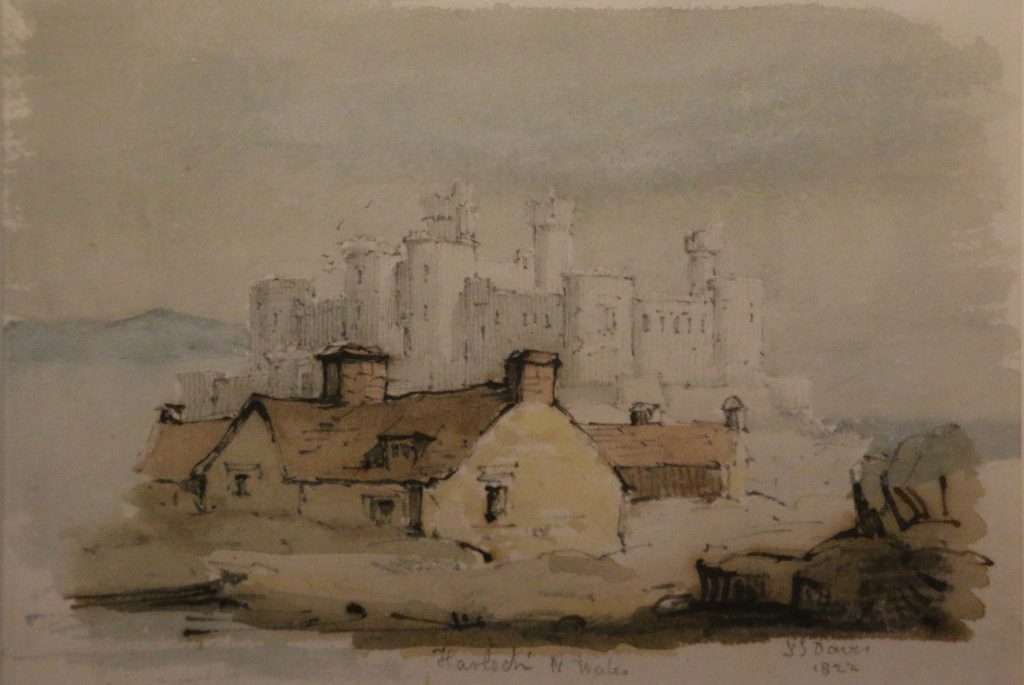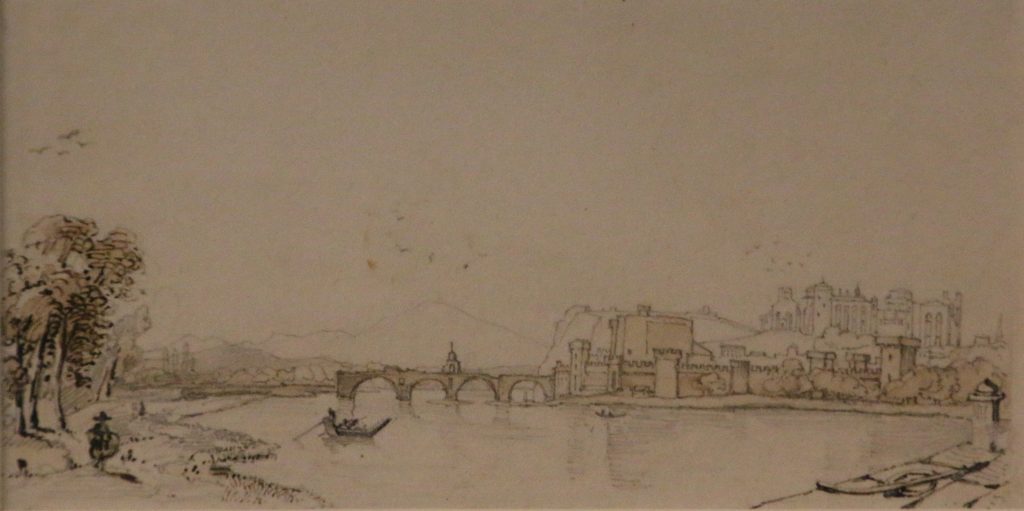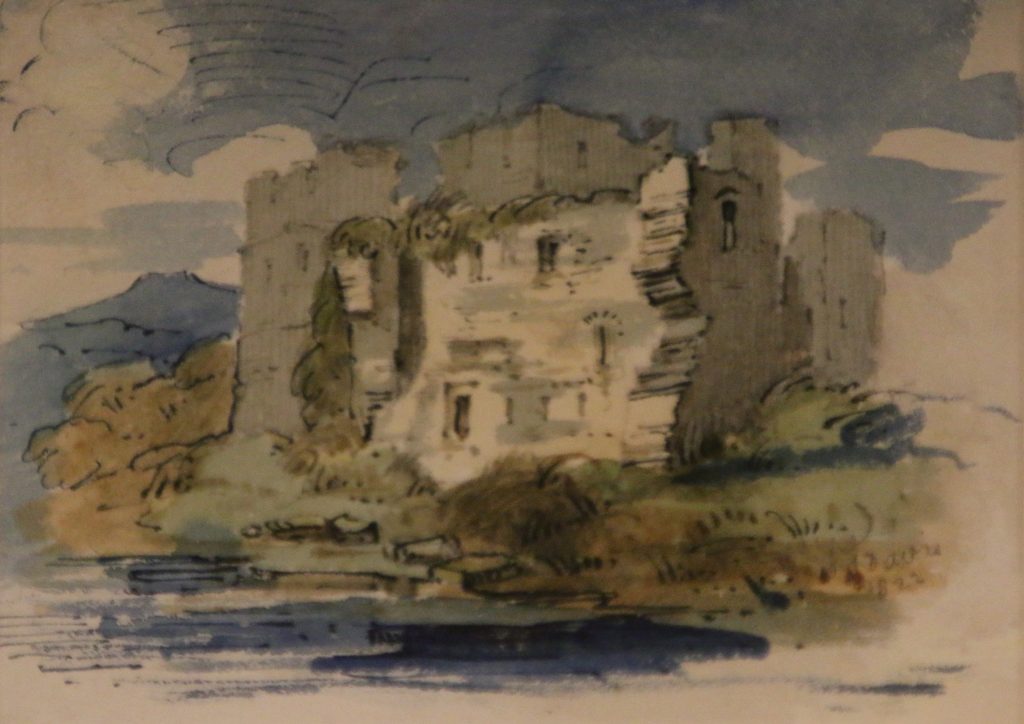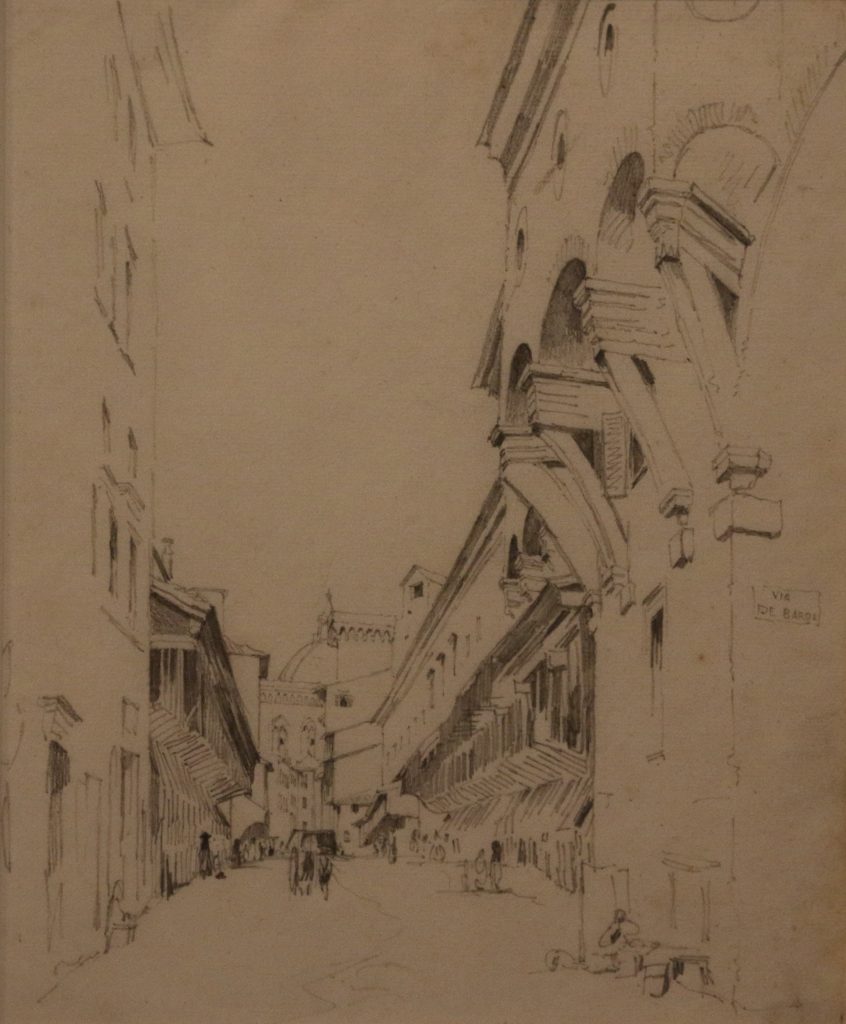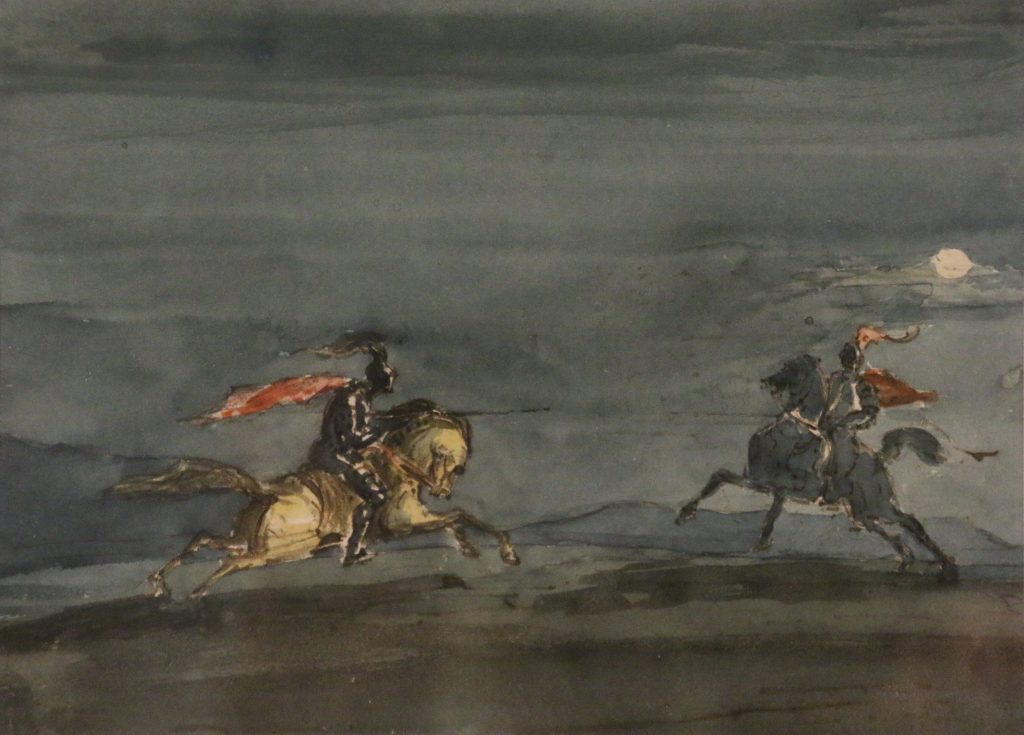
The South Gallery of Leominster Museum is dedicated to the work of John Scarlett Davis, one of the town’s home-grown artists. Our collection includes a self-portrait, painted in oils, which has recently been completely restored, a sketchbook, two views painted on wood panels thought to have come from Davis’s childhood home, and a large number of watercolours. Thanks to the forethought of previous generations of volunteers, Leominster Museum is privileged to care for a significant number of Davis’ paintings in his home town. There is a large self-portrait in oils, painted when Davis was 26. It was the first purchase made by the Museum in 1974.
Harry Ernest James (1861-1932) was another significant Leominster artist. He was born in Leominster in October 1861 and lived in the town as a small child before moving away. He exhibited at a number of important galleries and academies. The Museum has one of his watercolours, ‘On the Sand Dunes’, on display.
If you are unable to climb the stairs to the gallery, copies of many of the paintings can be seen on the tablet.
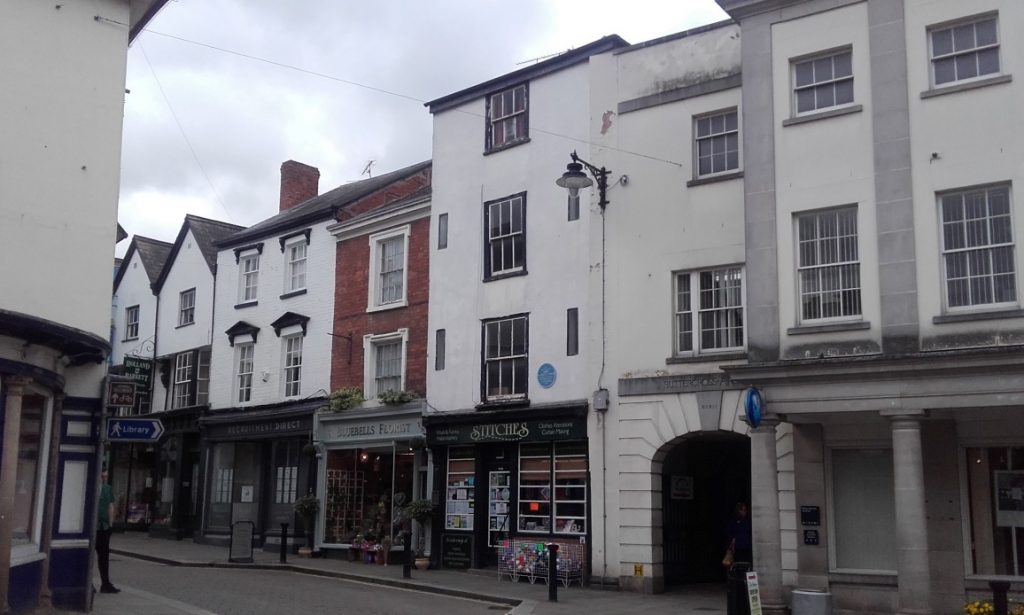
John Scarlett Davis was an English landscape, portrait and architectural painter. He was born on 1st September 1804 at 2 High Street, Leominster. He was the second of five children born to James Davis, a silversmith and watchmaker, and his wife Anne. The Davis family had moved to Leominster from Glamorgan over 200 years before and were well respected in the town. The house that John knew as a child still survives, although the wall paintings he did inside are lost. In the picture below, it is the house with the blue plaque.
John’s talent as a painter appeared early and was encouraged by his family. He first went to London in 1815 with his father at the age of 11, to receive a drawing prize. At that time, there were no trains or cars, so they probably travelled by stagecoach, which were pulled by horses and stopped regularly at coaching inns on the 4-day journey to London. The Lion Hotel in Broad Street was one of the most important inns in Leominster in those days.
Over the next two decades, he must have used the coaches many times to travel to and from London and elsewhere. His father sent him to boarding school in Hackney, London, at the age of 14, and he studied later at both the British Museum and the Royal Academy before becoming a professional artist. He returned to Leominster from time to time – for example, for his father’s funeral in 1828. For most of his adult life, he lived and worked in London, travelling to the Continent whilst working for several rich patrons.
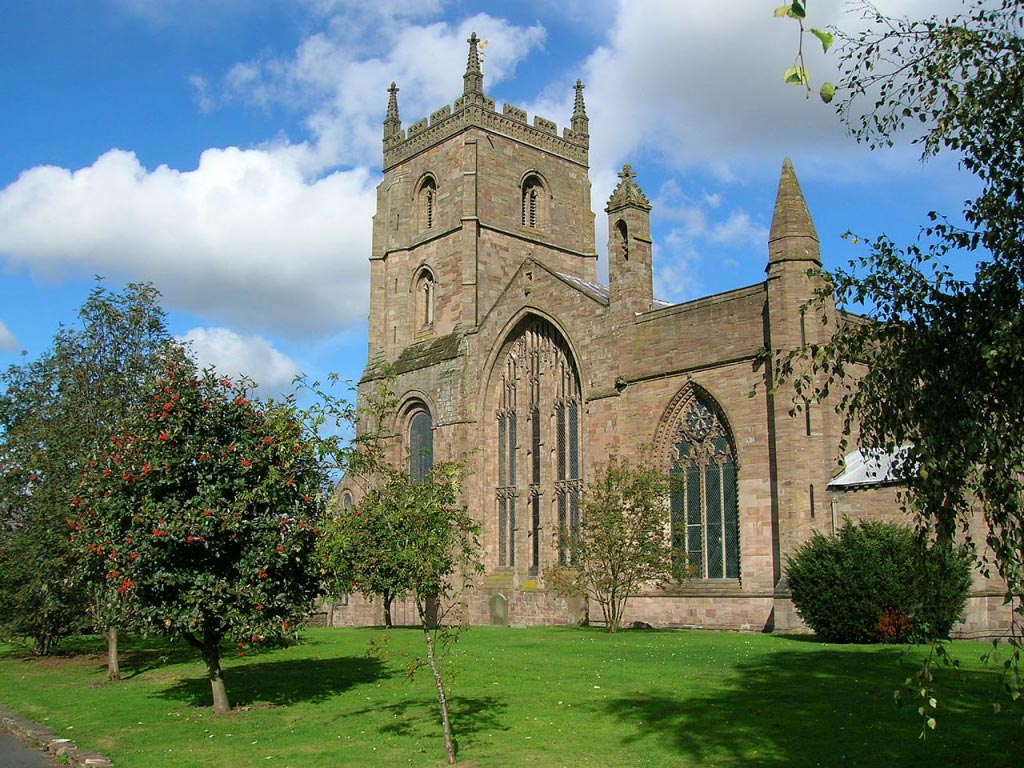
The Priory was the family’s place of worship. James and Anne Davis were married there, and John and his siblings were baptised in the church. Many of the Davis family are buried in the churchyard. Sadly, many of the headstones have been lost, so it is not possible to know exactly where their graves are. John himself died of tuberculosis on 29th September 1845, at the age of 41, and is buried in Kensal Green cemetery in London.
He had three daughters and three sons, of whom only the daughters survived beyond infancy. His siblings also had children and there is at least one descendant of the Davis family still living in the town.
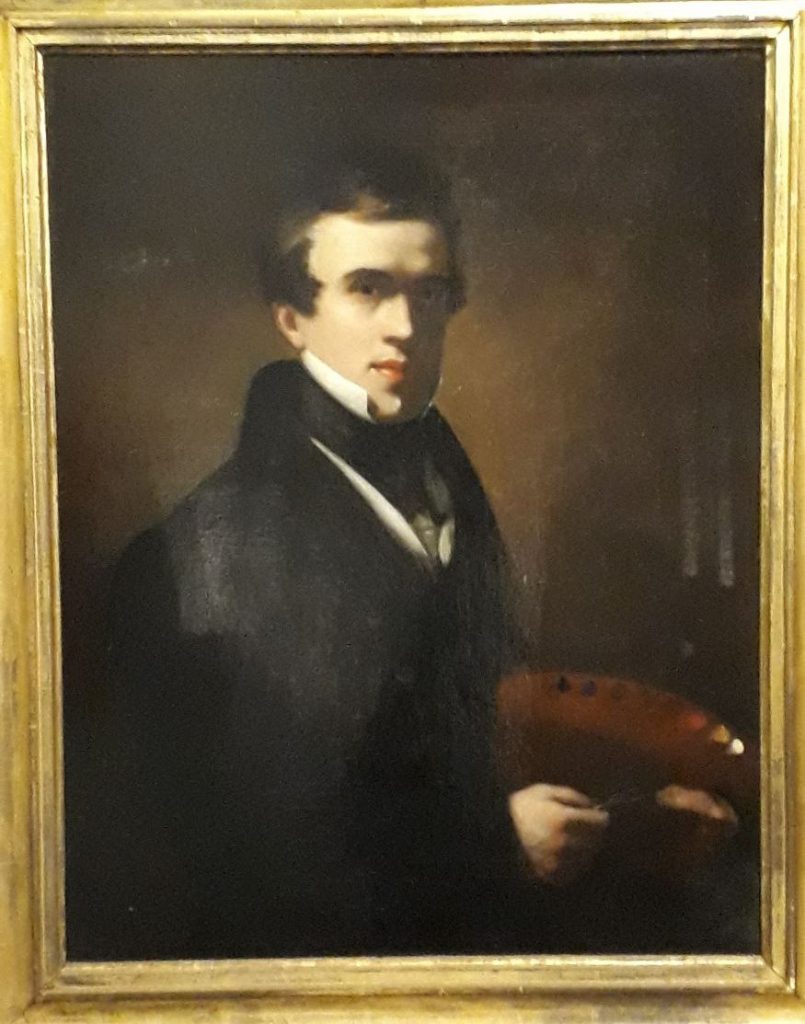
It is not known exactly which year John Scarlett Davis painted this self portrait in oils. The Museum recently obtained a grant to have the painting conserved. It was removed from the frame and dusted and cleaned. Old layers of overpaint and varnish, added in the mid-20th century, were removed. Areas of unstable paint were stabilised and the painting revarnished. The frame was dusted and regilded before the painting was replaced in it.
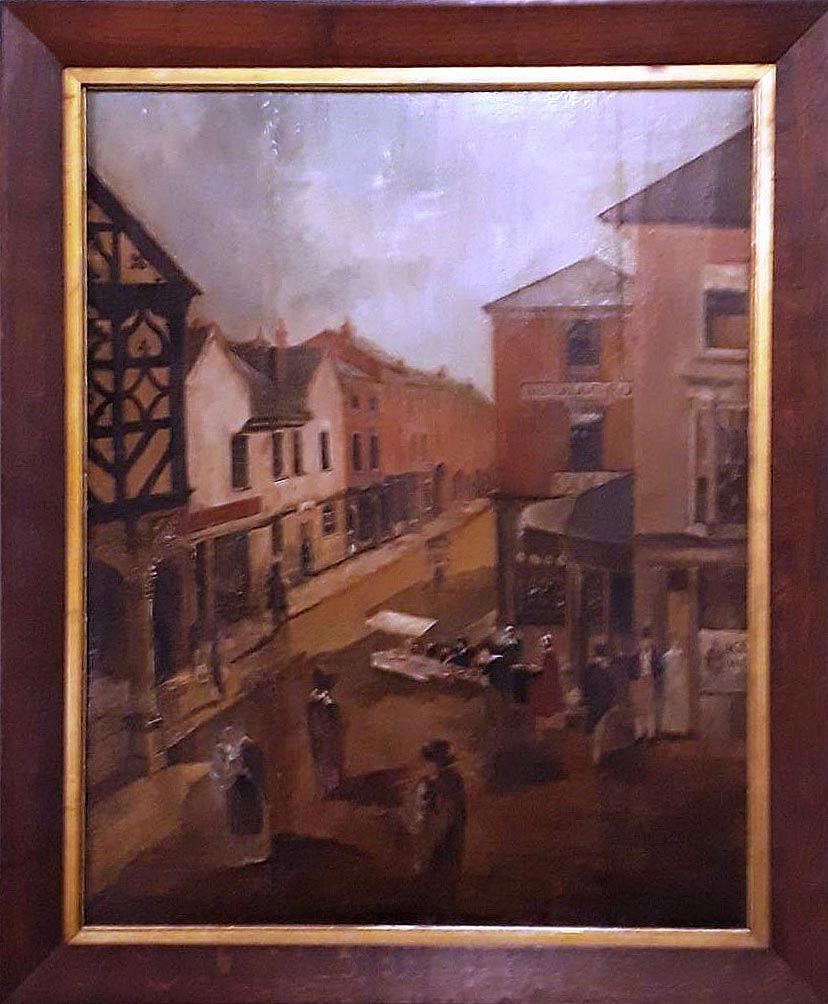
John almost certainly painted this picture from one of the windows in his house, as a boy. If he could return to his home town he would still recognise this view, more than two hundred years later. The shape of the streets and most of the buildings have not changed at all. The timber framed market house in the picture (now called Grange Court) can be seen at the left in its original position, before it was moved to where it is now.
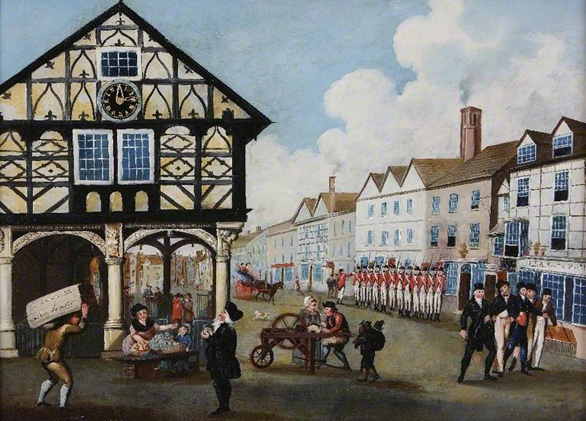
This picture was also painted by Davis when he was young. It shows clearly what Broad Street looked like in the early 19th century. Once again, you can see the market house in its original position. Many of the buildings you can see on Broad Street are still there. Lots of things are going on in the street – soldiers on parade, a woman selling things on a stall, a couple arriving in a horse drawn carriage and a young chimney sweep. Where do you think the group of men on the right have just come from?
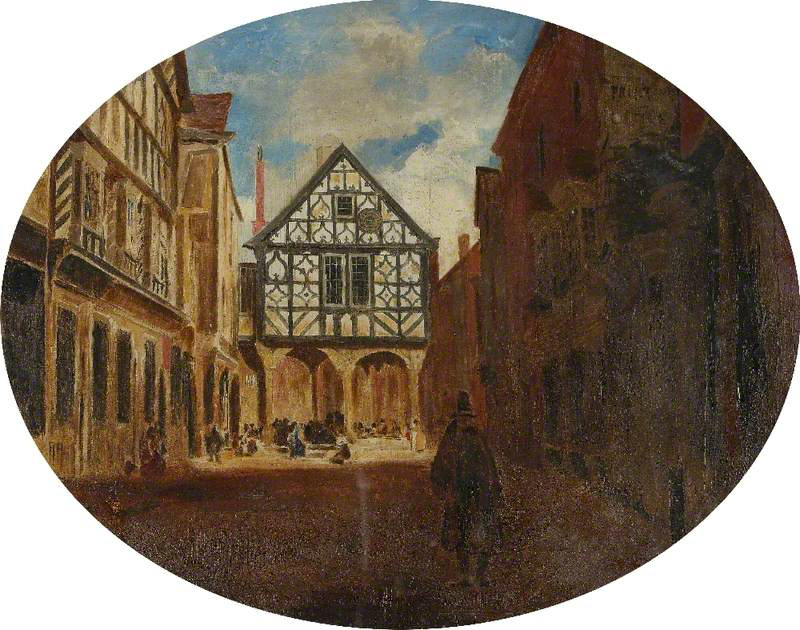
The painting shows why it was decided to move the market house. John’s view was looking down what is now the High Street, towards the top of Broad Street. Although the building didn’t block the road completely, it did restrict the throughflow of traffic. Being a timber frame building, it was relatively easy to take down without damage and reassemble elsewhere. It was moved from its first site at the top of Broad Street to where it is now in 1856, eleven years after John’s death in London. When that happened, it changed from being a market hall (with council chamber above and open trading space below) to a private house and the open ground floor was filled in to make more rooms. Now it is a community centre with a café.
On the national and international stage, Davis is probably better known for his watercolours than his oil paintings. The watercolours included portraits, landscapes and church interiors and he developed a distinctive speciality in painting the interiors of art galleries and libraries, both public and private. Between 1842 and 1845 he was commissioned to draw copies of the paintings in the collections of the British royal palaces. He painted scenes on the Continent during his travels there. He was in Florence in 1834 (where he painted the interior of the Uffizi gallery) and Amsterdam in 1841. The Museum also has a collection of small watercolours and a sketchbook, where he tried out many of his ideas.
In the last few months, the Museum has acquired a very fine new large watercolour painting, which is now on display in the gallery. JSD spent two periods in Paris during his travels on the Continent. The first was from July 1830, possibly with his friend and fellow artist James Holland.
Our watercolour was probably painted in 1830-31 when he completed a large number of Church interiors, especially in both St Eustache and St Sulpice. The architecture and details of the interior in our picture does not resemble any of his other paintings, but nor does it seem to match the way Eglise St Roche looks today. More research is needed to establish whether this is indeed a representation of St Roche or whether the picture has been mis-identified. Davis’s paintings can also be found in a number of large galleries around the world, including the National Portrait Gallery, Tate Britain, the Metropolitan Museum of Art and the Yale Centre for British Art.